
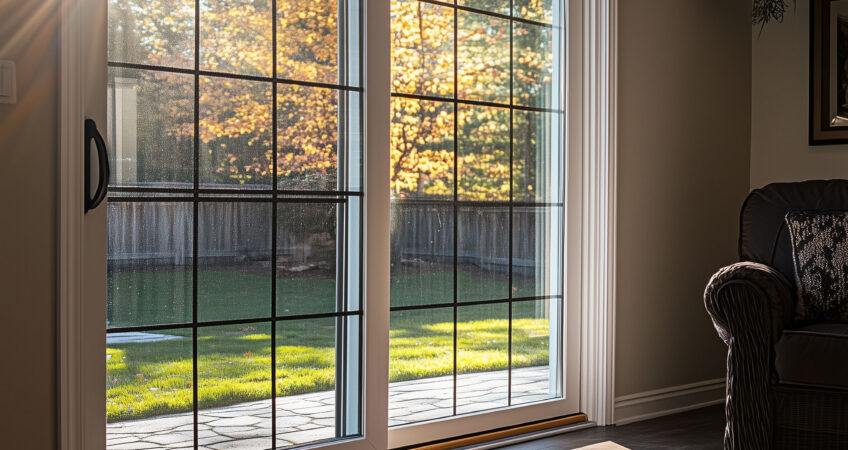
To pick the right sliding patio door for your home, you need to look at five key things: frame material, glass type, door size, energy performance ratings, and security features. Getting these five things right means you will end up with a door that lasts for decades, saves energy, and fits your home perfectly. This guide walks through every major decision you need to make, from choosing between vinyl and fiberglass frames to knowing when a door is truly energy efficient enough for Oregon’s rainy, wet winters.
Sliding patio doors are one of the most popular home upgrades in the Portland metro area. They connect your living room or kitchen to your backyard or deck, let in natural light, and give your home a clean, modern look. But not all sliding patio doors are built the same. A poor choice can lead to drafts, rising energy bills, hard-to-slide panels, and a door that needs replacing far too soon. This guide answers the real questions homeowners ask, so you can buy with confidence.
What Type of Sliding Patio Door Is Best?
The best type of sliding patio door is a two-panel design with one fixed panel and one sliding panel, made from a vinyl or fiberglass frame and fitted with Low-E double-pane glass. This setup gives you the right balance of energy efficiency, low maintenance, and smooth daily operation. It is the most common configuration and the one that fits the widest range of homes across the Newberg, Portland, and Salem areas.
That said, there are several styles to know about before you buy. Standard two-panel sliding doors work well for most homes. Both-panels-operable doors give you access from either side, which is great for decks with foot traffic coming from multiple directions. Multi-panel or pocket sliding doors are a more premium option, allowing several large glass panels to stack into a wall pocket and fully open a wall to the outdoors. French-style sliding doors have wider frames and a more traditional look if that suits your home’s style.
The right type depends on your layout. If your patio is off a living room with limited wall space, a standard two-panel door is the smart pick. If you want a dramatic indoor-outdoor living feel, a multi-panel configuration gives you that wide-open look. Talking to an experienced installer who knows the Portland and Newberg market is the best way to match a door style to your specific space.
How to Pick a Sliding Patio Door: The 5 Decisions That Matter Most
Picking a sliding patio door comes down to five decisions: frame material, glass package, door size, energy certifications, and security hardware. Miss any one of these and you may regret it years later. Here is how to think through each one.
What Frame Material Is Best for a Sliding Patio Door?
The best frame materials for sliding patio doors are vinyl and fiberglass, both of which outperform wood and aluminum in energy efficiency and long-term durability. Here is how the four main options compare side by side.
Vinyl is the most popular choice for good reason. It is affordable, does not rot, does not need painting, and provides solid insulation. The drawback is that low-quality vinyl can crack or warp in temperature extremes. Oregon’s mild but wet climate is actually a good fit for vinyl, but it is worth paying for a higher-quality product to avoid warping over time. According to Fine Homebuilding, the typical six-foot-wide patio door comes in dozens of styles and materials, and vinyl remains the most cost-effective framing option.
Fiberglass is stronger than vinyl and resists warping in both hot and cold conditions. It can be painted to match your trim and looks very similar to wood. Data from Andersen Windows indicates that their composite framing material is twice as strong as vinyl and can withstand temperatures up to 150 degrees Fahrenheit without warping, even in dark colors. Fiberglass typically costs more than vinyl but less than wood, making it an excellent middle-ground choice.
Wood frames are beautiful and insulate well, but they require the most upkeep. In the wet Willamette Valley climate, wood frames need regular painting or sealing to prevent moisture damage. They are the most expensive option and best suited to homeowners who love the natural look and are willing to maintain them.
Aluminum frames are slim, strong, and give a modern look, but aluminum conducts heat and cold easily. For energy efficiency in Oregon winters, any aluminum frame must have a thermal break, which is a plastic insulator placed between the inner and outer parts of the frame to slow heat transfer. The U.S. Department of Energy confirms that most modern glass doors with metal frames require this thermal break to perform well.
| Frame Material | Energy Efficiency | Durability | Maintenance | Best For |
|---|---|---|---|---|
| Vinyl | Very Good | Good (20-30 yrs) | Very Low | Budget-conscious buyers |
| Fiberglass | Excellent | Excellent (30+ yrs) | Low | Long-term performance |
| Wood | Good | Good (with maintenance) | High | Traditional aesthetics |
| Aluminum (with thermal break) | Good | Excellent | Low | Modern, slim-frame look |
Sources: U.S. Department of Energy (energy.gov), Fine Homebuilding, Andersen Windows, Thompson Creek.
What Is the Best Glass for a Sliding Patio Door?
The best glass for a sliding patio door is Low-E double-pane glass with an argon gas fill between the panes. Low-E stands for low emissivity, meaning the glass has a special coating that reflects heat in summer and keeps warmth inside during winter. The argon gas fill adds another layer of insulation. For homeowners in the Portland area who deal with cool, gray winters, this combination makes a real difference in comfort and energy bills.
According to the U.S. Department of Energy, single-pane glass doors lose much more heat than any other door type because glass is a poor insulator. Upgrading from single-pane to double-pane glass with a Low-E coating can significantly cut heat loss. Research published by PGT Windows suggests that the right glass door selection can save the average homeowner around $300 per year on heating and cooling costs.
Triple-pane glass is also available and provides even better insulation, which is worth considering if your home faces north or has a lot of exposure to winter wind. A 2025 analysis by Origin Windows found that opting for triple glazing can increase a sliding door’s energy efficiency by up to 80% compared to single-pane glass. For most homes in Beaverton, Tigard, and the surrounding areas, double-pane Low-E glass with argon is the sweet spot between performance and cost.
You also have the option of adding built-in blinds, which are sealed between the two panes of glass. These keep dust off the blinds entirely, give you privacy control, and help manage the amount of sunlight entering the home, which is useful for rooms that get afternoon sun.
What Size Sliding Patio Door Do I Need?
The most common standard sizes for sliding patio doors are 60 inches wide by 80 inches tall (5 feet x 6.8 feet) and 72 inches wide by 80 inches tall (6 feet x 6.8 feet). The right size depends on your rough opening, which is the space in your wall framed for the door. A professional installer will measure this before ordering anything.
Wider openings are possible with custom or non-standard sizes. According to a 2024 Home Materials Purchasing White Paper cited by Ace Decor Bath, upgrading from a 72-inch-wide door to a 96-inch-wide door can increase the door’s budget by about 35%, but the added visual openness and potential resale value often make it worthwhile.
The direction of the slide matters too. You choose whether the moving panel slides to the left or to the right. Think about where your furniture sits and which direction people naturally walk when going in and out. A door that slides the wrong way feels awkward every single day.
Many families across the Newberg and Portland metro area have older homes where the rough opening was built for a standard-size door. In those cases, a direct replacement at the same size is usually the most cost-effective route. If you are doing a larger renovation, that is the time to consider widening the opening for a bigger view.
Are Sliding Patio Doors Energy Efficient?
Yes, modern sliding patio doors are energy efficient, especially when fitted with Low-E glass, argon gas fills, weatherstripping, and insulated frames. The U.S. Department of Energy states that older single-pane sliding doors lose significantly more heat than other door types, but modern high-quality models with multiple glass layers and low-emissivity coatings are a good investment. The key is to look for the ENERGY STAR label, which means the door has met strict efficiency guidelines set by the U.S. Environmental Protection Agency.
The National Fenestration Rating Council (NFRC) label tells you a door’s U-factor, which measures how much heat passes through the glass. A lower U-factor is better. For the Pacific Northwest climate, look for a U-factor of 0.30 or below. The NFRC label also shows the Solar Heat Gain Coefficient (SHGC), which measures how much heat from sunlight enters the room. A lower SHGC is better for south-facing doors in sunny climates, but in Oregon’s cooler climate, a slightly higher SHGC on north-facing doors can actually help warm a room in winter.
Homeowners looking at replacement patio doors should always ask about ENERGY STAR certification. According to the ENERGY STAR program, run by the U.S. EPA, certified sliding glass doors must meet strict performance guidelines verified by independent testing. This is one of the easiest ways to compare products across brands.
What Is the Difference Between a Sliding Patio Door and a French Door?
The difference between a sliding patio door and a French door is how they open. A sliding patio door glides horizontally along a track and requires no floor clearance to operate. A French door swings open like a traditional door and needs space to swing either inward or outward. Sliding doors are better for tight spaces where a swinging door would hit furniture or create a tripping hazard. French doors have a more traditional, elegant appearance and are often preferred in older or craftsman-style homes.
From an energy standpoint, the U.S. Department of Energy notes that swinging doors generally offer a tighter seal than sliding types, since it is technically impossible to stop all air leakage around a sliding door’s weatherstripping while still allowing the door to move. That said, modern high-quality sliding doors have excellent weatherstripping that performs very well in real-world conditions, especially when installed correctly by a certified professional.
For homeowners in the Salem and Portland areas who have limited patio space or a deck right outside the door, sliding is usually the more practical choice. For those with wide decks and a preference for a classic look, French doors or even bi-fold doors may be worth exploring. The team at EnergyGuard’s doors service page can walk you through these options with real product samples in the showroom.
Is a Sliding Patio Door More Secure Than a French Door?
A sliding patio door can be just as secure as a French door, but only if it has the right hardware. Basic sliding doors with a single latch are not highly secure. Upgraded sliding patio doors with multipoint locking systems, auxiliary foot locks, and reinforced frames offer strong security comparable to any other exterior door.
According to Fine Homebuilding, multipoint locks that activate additional latches beyond the main handle latch are an important security feature on patio doors. These extra locking points improve both security and weathertightness. Many modern sliding doors also allow for an intermediate bolt that lets the door lock in a partially open position for ventilation, without leaving a gap large enough for entry.
Other security upgrades to ask about include anti-lift pins, which prevent the door from being lifted off its track from outside, and laminated or tempered glass. All modern patio doors sold by reputable dealers use tempered glass, which is stronger than standard glass and much harder to shatter.
Families in Tigard, Beaverton, and across the greater Portland area often ask about security when replacing doors. The right combination of a multipoint lock, a strong frame, and tempered glass gives you solid peace of mind. Your installer should walk you through every security option before you finalize a purchase.
What Are Common Problems With Sliding Doors?
The most common problems with sliding doors are difficult sliding (sticking), air or water drafts, fogging between the glass panes, damaged weatherstripping, and worn-out rollers. Most of these issues are caused by dirt buildup on the track, aging weatherstripping, or simple wear from years of use.
A door that sticks or requires force to open is one of the earliest signs of a problem. Dirt and debris collect in the track over time, grinding against the rollers and making the door hard to move. Regular cleaning of the track with a damp cloth and periodic lubrication of the rollers can prevent this. According to Thompson Creek, sliding patio doors that receive consistent light maintenance typically last about 30 years.
Foggy or cloudy glass between the panes means the seal between the two panels has failed. Once that seal breaks, moisture enters and you lose the insulating gas fill entirely. This is not a cosmetic problem; it is a functional one that hurts your home’s energy efficiency every day. At that point, repair is rarely cost-effective and a full replacement is the better investment.
Drafts are another clear warning sign. If you can feel cold air coming in around a closed door, the weatherstripping has worn down or the frame has shifted. The U.S. Department of Energy points out that weatherstripping on sliding doors wears down over years of use, so air leakage increases as the door ages. Replacing weatherstripping is a low-cost fix on a relatively new door, but on an older door it may be more worthwhile to replace the whole unit.
How Often Do Sliding Doors Need to Be Replaced?
Sliding doors need to be replaced every 20 to 30 years on average, with well-maintained, high-quality doors sometimes lasting up to 30 years or more. A low-quality door or one that was poorly installed may need replacing in as little as 10 to 15 years, according to data from United Builders. The main factors that determine lifespan are frame material, glass quality, installation accuracy, and how well the door is maintained.
Homeowners who bought their homes with existing patio doors should check when the door was installed. If the door is more than 20 years old and showing any of the warning signs described above, such as drafts, sticking, or fogged glass, replacement is almost certainly more cost-effective than ongoing repairs. In Oregon, where winter rain and moisture exposure is heavy, older doors tend to degrade faster than in drier climates.
Replacing a sliding patio door is also one of the smarter home improvement investments. When you look at full window and door replacement options, updated sliding patio doors consistently improve comfort, lower energy use, and add to resale appeal.
How Long Do Aluminum Sliding Doors Last?
Aluminum sliding doors last 20 to 30 years or longer when properly maintained, which is comparable to vinyl and fiberglass. Aluminum frames are extremely strong and do not rot or warp. The main maintenance concern with aluminum is keeping the track clean and ensuring the weatherstripping is in good condition. An aluminum door with a thermal break will also hold up better in cold climates, since the thermal break prevents condensation from forming on the interior frame during cold Oregon winters.
Can You Replace a Sliding Patio Door Without Replacing the Frame?
Yes, you can sometimes replace only the door panel without replacing the entire frame, but this only works if the existing frame is still in good structural condition and is compatible with the new door. If the frame has warped, rotted, or shifted out of alignment, replacing only the panel will not fix the underlying problems. A professional installer will assess the frame first and give you an honest recommendation. In many cases, replacing the full unit, frame and all, is the better long-term investment.
What Is Better Than Sliding Doors for a Patio?
Bi-fold doors and multi-slide pocket doors can offer a wider opening than standard sliding doors and create a more dramatic indoor-outdoor feel. However, both come with higher upfront costs and more maintenance requirements. Bi-fold doors fold back like an accordion and require more hardware to maintain. Multi-slide pocket doors require a large wall cavity to store the panels when open.
For most homeowners in Newberg, Portland, Tigard, and Salem, a high-quality sliding patio door is still the best combination of value, performance, and simplicity. French doors are a good alternative for homes with a more traditional style where the swing-out operation will not be a problem.
The right answer depends on your budget, your home’s architecture, and how you want to use the space. Speaking with a door specialist who knows the local market is the best first step. A free design consultation lets you see real options and get expert guidance before committing to anything.
What Is a Magic Sliding Door?
A “magic” sliding door is a term sometimes used for automatic sliding doors or soft-close sliding doors that glide with very little effort and stop smoothly without banging. In the context of residential patio doors, it often refers to lift-and-slide or tilt-and-slide door systems, which are premium European-style doors that lift slightly off their track when the handle is turned, making them exceptionally smooth and airtight when closed. These doors are more common in high-end new construction projects.
For most Oregon homeowners, a well-made standard sliding patio door with quality rollers and a clean track provides a smooth, effortless experience without the premium price of a lift-and-slide system. The new construction team at EnergyGuard can advise you on whether these premium systems make sense for your project and budget.
What to Do Instead of Sliding Doors?
Instead of sliding doors, homeowners can choose French doors, bi-fold doors, center-hinge patio doors, or multi-panel folding systems. Each alternative has specific advantages. French doors are the most popular alternative and add a classic look. Bi-fold doors create the widest possible opening. Center-hinge doors combine some benefits of both sliding and French styles while needing less swing clearance than a full French door.
If your main concern is space, a sliding door is still the most space-efficient choice because it requires zero floor clearance. If your main concern is aesthetics and you have enough clearance, French doors often look more elegant in traditional homes. Homeowners who want the widest possible opening for entertaining or outdoor dining spaces find that bi-fold or multi-slide systems are worth the higher investment.
For homeowners weighing all these options in the Portland, Beaverton, and surrounding areas, walking through a showroom and seeing the options in person makes a real difference. It is much easier to make the right call when you can physically operate the different door types and compare how they look and feel.
Is a Sliding Glass Door Cheaper Than French Doors?
Yes, a sliding glass door is generally cheaper than French doors at a comparable quality level. Sliding doors have simpler hardware, fewer moving parts, and lower installation complexity. French doors require two hinged panels, a more complex frame, and more labor to install correctly, especially when ensuring both panels seal well against each other. For budget-conscious homeowners in the Willamette Valley, sliding patio doors offer more value per dollar while still delivering excellent energy performance and curb appeal.
That said, price should not be the only factor. A low-cost sliding door will likely underperform and need replacement sooner than a higher-quality model. Spending a little more upfront on a well-made door with proper ENERGY STAR certification and a solid warranty will save money over the long run in both energy bills and replacement costs.
Homeowners planning a broader renovation can also look at replacement windows and doors in the Portland area to see how combining a new sliding patio door with updated windows can maximize both energy savings and home value in a single project.
How to Reduce Sliding Door Costs Without Sacrificing Quality
To reduce sliding door costs without sacrificing quality, focus on choosing a standard size rather than a custom dimension, selecting vinyl over wood or fiberglass, and working with a certified dealer who buys directly from quality manufacturers. Custom sizes always cost more than standard openings. Vinyl frames perform excellently in Oregon’s climate and cost significantly less than fiberglass or wood while still qualifying for ENERGY STAR certification.
Choosing a dealer with strong manufacturer relationships also helps. EnergyGuard Windows and Doors works directly with Milgard and Marvin, two of the most respected manufacturers in the industry, and has done so for over 40 years. Certified dealers get better pricing and have access to warranty support that independent contractors simply cannot offer.
Timing can also affect pricing. Seasonal promotions and specials are common in the door and window industry, especially in the late fall and winter months when installation demand slows. Checking the current specials page before scheduling your consultation is a smart move for any homeowner looking to get the most value.
What to Look for When Buying a Sliding Patio Door: A Checklist
When buying a sliding patio door, confirm these items before you sign anything. First, check that the door carries the ENERGY STAR label and has an NFRC rating label showing the U-factor and SHGC. Second, confirm the frame material and ask whether it has a thermal break if it is aluminum. Third, ask whether the glass is double or triple pane and whether it uses a Low-E coating and argon or krypton gas fill. Fourth, review the security features, specifically whether it has a multipoint lock and an auxiliary foot lock. Fifth, ask about the Performance Grade (PG) rating. According to Fine Homebuilding, the PG rating was developed jointly by the Window and Door Manufacturers Association and the American Architectural Manufacturers Association to measure a door’s ability to handle wind, water, and structural pressure. A PG rating of 40 is a good minimum standard for most residential applications outside of coastal zones.
Sixth, ask about the warranty. A quality door should come with at least a limited lifetime warranty on the frame and a multi-year warranty on the glass seal. Seventh, confirm that the installer is licensed, bonded, and certified. EnergyGuard Windows and Doors is AAMA Installation Master certified and EPA Lead-Safe certified, which means every installation follows the industry’s highest standards.
Homeowners who also want to update windows at the same time can explore full window replacement services in the same consultation visit, making it easy to coordinate the entire project at once.
Frequently Asked Questions
How much should a new sliding patio door cost in the Portland, Oregon area?
A new sliding patio door in the Portland, Oregon area varies widely based on material, glass type, size, and installation complexity. Entry-level vinyl sliding doors start at a lower price point, while premium fiberglass or multi-panel systems cost significantly more. The best way to get an accurate number is to schedule a free in-home consultation with a certified dealer like EnergyGuard Windows and Doors, who can measure the opening and provide a firm quote based on exactly what your home needs. Do not rely on online price estimates since local labor rates and product specifications vary greatly.
Which brand is best for sliding patio doors in the Newberg and Portland area?
Milgard and Marvin are two of the most trusted brands for sliding patio doors available in the Newberg and Portland area. Both brands offer strong product lines with ENERGY STAR options, solid warranties, and good dealer support networks. EnergyGuard Windows and Doors is a certified dealer for both Milgard and Marvin, meaning you get access to professional installation support backed by manufacturer warranties.
What is the life expectancy of a sliding patio door in Oregon?
The life expectancy of a sliding patio door in Oregon is 20 to 30 years under normal conditions, with well-maintained, high-quality doors sometimes lasting longer. Oregon’s wet winters and moderate temperatures are generally less harsh on patio doors than extreme heat or freeze-thaw climates. Regular cleaning of the track, lubrication of the rollers, and inspection of the weatherstripping each year can extend the life of a door significantly, according to data from Thompson Creek Windows and Doors.
Can I replace a sliding patio door in Salem or Beaverton without replacing the frame?
You can sometimes replace only the sliding panel without replacing the full frame in Salem, Beaverton, or surrounding areas, but only if the existing frame is structurally sound, square, and compatible with the replacement door. A certified installer will assess the frame before recommending whether a panel-only swap or a full unit replacement is the right approach. In many cases, a full replacement is more cost-effective over the long term, especially if the frame is more than 15 to 20 years old.
How do I know if my sliding patio door needs to be replaced?
Your sliding patio door likely needs to be replaced if you notice any of these signs: it sticks or requires force to open and close, you feel drafts along the edges when the door is closed, the glass appears foggy or cloudy between the panes, the frame shows visible cracks or warping, or the door no longer locks securely. According to United Builders, a door that sticks, makes loud noises, or does not open and close without effort may be past its useful life. In the Portland metro area, EnergyGuard offers free in-home assessments so you can get a professional opinion without any obligation.
What glass type is best for sliding patio doors in the Pacific Northwest?
The best glass for sliding patio doors in the Pacific Northwest is Low-E double-pane glass with an argon gas fill. The Low-E coating reduces heat loss during cool Oregon winters and limits solar heat gain in summer. The argon gas between the panes adds a layer of insulation that standard air-filled double-pane glass does not provide. For north-facing doors or homes at higher elevations near Hood River, triple-pane glass is worth considering for maximum thermal performance.
Are homeowners in Tigard eligible for energy efficiency rebates on new sliding patio doors?
Yes, homeowners in Tigard and throughout the greater Portland area may be eligible for energy efficiency incentives through programs like Energy Trust of Oregon, which EnergyGuard Windows and Doors is a certified Trade Ally of. These programs can provide cash incentives when you upgrade to qualifying ENERGY STAR-certified doors. Eligibility and rebate amounts depend on the specific product and installation details, so it is best to confirm current offers during your free consultation.
Final Thoughts
Picking the right sliding patio door comes down to matching the right frame, glass, and hardware to your home, your climate, and your long-term goals. Vinyl and fiberglass frames with Low-E double-pane glass are the best combination for most Oregon homeowners. Security hardware, proper sizing, and ENERGY STAR certification should all be on your checklist before you buy. A door that is installed correctly by a certified professional will last 20 to 30 years or more and will pay back its cost through lower energy bills and a better living experience every single day.
Ready to find the right sliding patio door for your home? EnergyGuard Windows and Doors has served homeowners across Newberg, Portland, Beaverton, Tigard, Salem, and the entire Willamette Valley for over 40 years. As a certified Milgard and Marvin dealer and a Trade Ally of Energy Trust of Oregon, we bring real expertise and quality products to every project.
Visit EnergyGuard Windows and Doors to learn more about what we do, or go straight to our replacement door services page to see the full range of patio door options available. Call us today at (503) 554-5500 or schedule your free in-home design consultation online. There is no pressure and no obligation. Just honest advice from people who know doors.