Window energy ratings are numbers on a label that tell you how well a window keeps heat in, blocks solar heat, lets in light, and stops air leaks. These ratings are tested and certified by the National Fenestration Rating Council (NFRC) and are the same numbers used by the ENERGY STAR program to set minimum performance standards across the country. According to the U.S. Department of Energy, heat gain and heat loss through windows are responsible for 25% to 30% of all residential heating and cooling energy use. For homeowners in Newberg, Portland, and across the Willamette Valley, knowing how to read these ratings is the first step toward picking the right replacement windows and cutting energy bills. This guide breaks down every rating on the NFRC label, explains what the numbers mean for Oregon’s climate, and shows you exactly what to look for before you buy.
What Are Window Energy Ratings and Why Do They Matter?
Window energy ratings are standardized measurements that show how a window performs in areas like insulation, solar heat control, light transmission, and air tightness. They matter because windows are one of the weakest links in a home’s thermal envelope. Data from the U.S. Department of Energy shows that windows in American homes account for 30% of building heating and cooling energy, which adds up to about 4.1 quadrillion BTUs of primary energy every year. That is a massive amount of wasted energy, and most of it comes down to the performance of the glass and frame.
Every NFRC-certified window carries a label with up to five performance ratings. These are U-factor, Solar Heat Gain Coefficient (SHGC), Visible Transmittance (VT), Air Leakage (AL), and Condensation Resistance (CR). The first two are mandatory and used by ENERGY STAR to determine if a window qualifies for certification. The last three are optional but still very helpful when comparing products side by side.
For homeowners in the Portland metro area, these ratings are not just technical details. They directly affect how warm your home stays in winter, how cool it stays in summer, and how much you spend on heating and cooling every month. Oregon sits in ENERGY STAR’s Northern climate zone, which has some of the strictest U-factor requirements in the country. Picking windows that meet or exceed these numbers is one of the smartest investments you can make.
What Is U-Factor and Why Does It Matter for Windows?
U-factor is a measurement of how much heat passes through a window. The lower the U-factor, the better the window insulates your home. According to the U.S. Department of Energy, U-factor values for windows generally range from 0.20 to 1.20, and they are measured in BTU per hour per square foot per degree Fahrenheit (Btu/h·ft²·°F).
A window with a U-factor of 0.25 lets far less heat escape than a window with a U-factor of 0.80. In cold climates like Oregon’s Willamette Valley, this difference has a real impact on your monthly energy bills and your comfort at home. Research from Penn State University’s Energy Conservation program shows that roughly two-thirds of the heat lost through a window comes from radiant transmission through the glass itself. A low U-factor window with proper Low-E coatings addresses this problem directly.
Homeowners in Newberg and Beaverton who are shopping for windows and doors replacement should prioritize U-factor above all other ratings. In a heating-dominant climate, U-factor is the single most important number on the label.
Is .28 a Good U-Factor for Windows?
Yes, .28 is a good U-factor for windows. A U-factor of 0.28 beats the general ENERGY STAR threshold of 0.30 or less that many window companies reference for the Northern climate zone. It also meets the equivalent energy performance path under ENERGY STAR Version 7.0, which took effect in October 2023. According to the U.S. Department of Energy, the lower the U-factor, the more energy-efficient the window. A 0.28 U-factor will deliver solid insulation for homes across Portland, Tigard, and the surrounding Oregon communities.
For homeowners who want even better performance, the ENERGY STAR Most Efficient designation requires a U-factor of 0.20 or lower, according to the Building America Solution Center. Those products are all triple-glazed and provide the highest level of insulation available on the market today.
What Is Solar Heat Gain Coefficient (SHGC) on a Window?
Solar Heat Gain Coefficient (SHGC) is the fraction of solar radiation that passes through a window and enters your home as heat. SHGC is measured on a scale from 0 to 1. A lower SHGC means the window blocks more solar heat, while a higher SHGC means more solar heat gets through.
According to the ENERGY STAR program, SHGC values for windows typically range from 0.25 to 0.80. In hot climates like Arizona or Texas, a low SHGC (below 0.25) is critical for keeping cooling costs down. But in Oregon’s Northern climate zone, the situation is different. The ENERGY STAR program does not set a strict upper limit on SHGC for the Northern zone because passive solar heat gain during winter actually helps reduce heating costs.
South-facing windows in Portland and Salem benefit from a moderate SHGC of 0.30 to 0.40, which lets winter sunlight warm the home naturally. West-facing windows should have a lower SHGC to block strong afternoon heat in summer. The right SHGC depends on the direction your windows face, the amount of shade around your home, and how much direct sunlight each wall receives throughout the year.
What Is the Difference Between U-Factor and SHGC?
The difference between U-factor and SHGC is that U-factor measures how much non-solar heat transfers through a window, while SHGC measures how much solar radiation passes through the glass. U-factor tells you about insulation. SHGC tells you about heat from the sun. Both numbers appear on the NFRC label, and both are used by ENERGY STAR to set certification standards.
According to the U.S. Department of Energy, the NFRC U-factor rating represents the entire window’s performance, including the frame and spacer material, not just the glass. SHGC, on the other hand, measures only the solar energy that either passes directly through the glazing or gets absorbed by the glass and then released as heat inside the home. In Oregon, U-factor is the priority because heating costs are the bigger concern for most of the year.
What Is Visible Transmittance (VT) and How Does It Affect Your Home?
Visible Transmittance (VT) is a rating that measures how much natural light a window lets into your home. VT is expressed as a number between 0 and 1. According to the U.S. Department of Energy, VT values generally range from 0.20 to 0.80. A higher VT means more natural light passes through the glass.
A window with a VT of 0.50 lets in 50% of the visible light that hits it. A window with a VT of 0.70 lets in 70%. For rooms where you want bright, natural lighting, like kitchens, living rooms, and home offices, a higher VT is a better choice. For rooms where you want less glare, like bedrooms or media rooms, a lower VT may work better.
Homeowners in Newberg and across the Willamette Valley often benefit from a higher VT because Oregon’s winters are long and cloudy. Letting in more natural light reduces your need for electric lights during the day, which saves money and makes your home feel more open and inviting. The Light-to-Solar Gain (LSG) ratio, which compares VT to SHGC, is another useful metric. A higher LSG means the window transmits more light without adding excessive heat.
What Is Air Leakage on a Window and How Is It Measured?
Air leakage on a window is a rating that measures the volume of air that passes through cracks and joints in the window assembly. It is expressed in cubic feet per minute per square foot of window area (cfm/ft²). According to the National Fenestration Rating Council, air leakage values typically range from 0.1 to 0.3. The lower the number, the tighter the seal and the less air escapes or enters through the window.
This is an optional rating on the NFRC label, but it is still important. The ENERGY STAR program requires that air leakage be 0.30 or less for a building to qualify for certification. Windows with low air leakage reduce drafts, improve comfort, and help your HVAC system work more efficiently. According to the Green Building Alliance, energy loss in homes happens through conduction, radiation, convection currents, and air leakage, and energy-efficient windows combat all four.
Picture windows tend to have the lowest air leakage because the glass is sealed directly into the frame with no moving parts. Casement windows also perform well because they use full-compression seals that press tight when closed. Homeowners in Portland who deal with winter wind and rain should pay close attention to this number when comparing replacement windows and doors in Portland.
What Is Condensation Resistance and What Is a Good Rating?
Condensation resistance is a rating that measures how well a window resists moisture from forming on the inside surface of the glass. It is scored on a scale from 1 to 100. A higher number means the window is better at preventing condensation. This rating is optional on the NFRC label, and not every manufacturer includes it.
Condensation forms when the inside surface of the glass gets colder than the dew point of the air in the room. This is common in Oregon’s cool, damp winters, especially in bathrooms, kitchens, and bedrooms. Over time, condensation can lead to mold, mildew, and even damage to window frames and surrounding walls. A window with a condensation resistance rating of 50 or higher is considered good for most climates. Windows with ratings above 60 are excellent for homes in areas with long, wet winters like the Willamette Valley.
How Do You Read an NFRC Window Label?
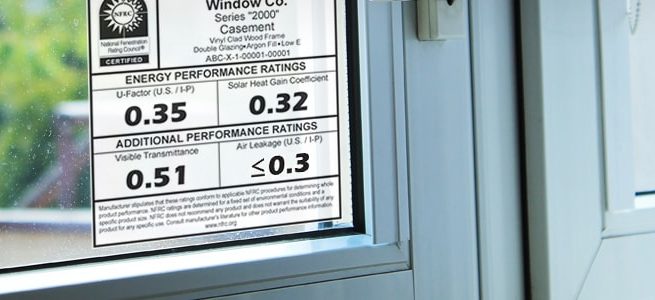
You read an NFRC window label by looking at the five performance ratings listed on it. The label shows the manufacturer name, the product description, and then the rated values for U-factor, SHGC, VT, and optionally Air Leakage and Condensation Resistance. According to the National Fenestration Rating Council, this label is found on the exterior glazing of every NFRC-certified product.
Here is a simple way to read each number on the label:
- U-Factor (top left): How well the window insulates. Lower is better. Look for 0.30 or less in Oregon.
- SHGC (top right): How much solar heat passes through. Lower blocks more sun. In Oregon, a moderate SHGC of 0.25 to 0.40 works well depending on window direction.
- VT (middle left): How much light comes through. Higher means more natural light. Look for 0.40 or above for bright rooms.
- Air Leakage (middle or bottom right): How much air sneaks through. Lower is better. Should be 0.30 or less.
- Condensation Resistance (bottom): How well it resists moisture. Higher is better. Look for 50 or above.
Every window sold by a certified dealer like EnergyGuard Windows & Doors in Newberg carries an NFRC label. Comparing these numbers side by side is the most reliable way to judge window quality across different brands and product lines.
What Are Good Energy Performance Ratings for a Window?
Good energy performance ratings for a window depend on your climate zone, but for Oregon homeowners, the ideal numbers are a U-factor of 0.30 or below, an SHGC between 0.25 and 0.40, a VT of 0.40 or higher, and an air leakage rating of 0.30 or less. These numbers meet or exceed ENERGY STAR requirements for the Northern climate zone.
Under ENERGY STAR Version 7.0, which went into effect in October 2023, the Northern zone’s prescriptive path requires a U-factor of 0.22 or lower and an SHGC of 0.17 or higher, according to Pro Builder. An equivalent energy performance path allows a slightly higher U-factor if paired with a higher SHGC. For homeowners looking at the best possible performance, the ENERGY STAR Most Efficient program requires a U-factor of 0.20 or lower, and all products in that category are triple-glazed.
The table below compares the key ENERGY STAR Version 7.0 window requirements by climate zone:
| Climate Zone | U-Factor Requirement | SHGC Requirement | Best For |
|---|---|---|---|
| Northern (includes Oregon) | ≤ 0.22 (prescriptive) | ≥ 0.17 | Cold winters, heat retention |
| North-Central | ≤ 0.25 | ≤ 0.40 | Mixed climates |
| South-Central | ≤ 0.28 | ≤ 0.23 | Hot summers, mild winters |
| Southern | ≤ 0.32 | ≤ 0.23 | Hot, humid climates |
| Most Efficient (all zones) | ≤ 0.20 | Varies | Maximum insulation |
Sources: ENERGY STAR Version 7.0 Specification (effective October 2023), Building America Solution Center, Andersen Windows
Which Is Better Energy Rating, A or F?
A is a much better energy rating than F. Energy ratings use a letter scale from A (most efficient) to G (least efficient) in many countries and rating systems. An A-rated window wastes far less energy than an F-rated window. The letter-based rating system is more commonly used in Europe and the United Kingdom, while the United States relies on the NFRC numeric ratings (U-factor, SHGC, VT) rather than letter grades.
If you see a letter energy rating on a window or appliance, the rule is simple. A is always the best and F is near the bottom. For American homeowners, the NFRC label and the ENERGY STAR certification mark are the most reliable ways to judge window efficiency. Any window that carries the ENERGY STAR label and meets the Northern zone requirements will perform well in homes across Newberg, Tigard, and Salem.
Is Energy Class F Good or Bad?
Energy class F is bad. An F rating means the product falls near the bottom of the efficiency scale. It uses far more energy and provides far less insulation than a product rated A or B. In the European Window Energy Rating Scheme, an F-rated window would allow significant heat loss and contribute to high energy bills. Homeowners should always aim for the highest energy class they can afford, which in the NFRC system means the lowest U-factor and the most appropriate SHGC for their climate zone.
Is D Energy Rating Good?
No, D energy rating is not good. A D rating falls in the lower-middle range of the efficiency scale. While it is better than E, F, or G, it is still well below the performance of A, B, or C-rated products. For homeowners in Oregon, a D-rated window would not meet ENERGY STAR standards for the Northern climate zone. It would allow too much heat to escape during the long winter months and drive up heating costs. Investing in a window that meets at least the ENERGY STAR Northern zone requirements is a much better use of money.
How Does Low-E Glass Affect Window Energy Ratings?
Low-E glass directly improves window energy ratings by lowering the U-factor and controlling the SHGC. According to the U.S. Department of Energy, windows with Low-E coatings cost about 10% to 15% more than regular windows, but they reduce energy loss by 30% to 50%. That is a significant return on a small upfront investment.
Low-E stands for low emissivity. The coating is a microscopically thin layer of metallic oxide applied to the glass surface. It reflects heat back toward its source while still letting visible light through. In winter, it keeps warmth inside your home. In summer, it blocks solar heat from entering. According to InterNACHI, Low-E coatings reduce heat transfer and cut energy loss by 30% to 50%, and the heating and cooling energy lost through windows accounts for about 4% of all U.S. energy consumption every year.
There are two main types of Low-E coatings. Soft-coat Low-E is applied in a vacuum chamber and offers better insulation and UV protection. Hard-coat Low-E is applied during the glass manufacturing process and is slightly more durable but less efficient. Most modern Low-E windows from brands like Milgard and Marvin use soft-coat technology for the best results in cold climates like Oregon.
What Runs Up Your Electric Bill the Most?
Heating and cooling runs up your electric bill the most. According to the U.S. Energy Information Administration, heating and cooling account for roughly 50% of total home energy use in the United States. Windows play a direct role in that cost because they are one of the biggest sources of heat transfer in a home’s envelope. The U.S. Department of Energy reports that about 30% of a home’s heating energy is lost through windows alone.
In Oregon’s cool, wet climate, the heating system runs from October through April in most years. Every bit of heat that escapes through old or poorly insulated windows forces the furnace to work harder and longer. Replacing old single-pane or failing double-pane windows with high-performance, ENERGY STAR-certified products can reduce total heating and cooling costs by an average of 13%, according to ENERGY STAR data.
Homeowners in Beaverton and Portland who notice signs their windows need to be replaced, like drafts, fog between panes, or difficulty opening and closing, are likely losing energy and money every single day their old windows stay in place.
What Wastes the Most Electricity in a House?
Heating and cooling wastes the most electricity in a house when the home has poor insulation, air leaks, or old windows. According to the U.S. Department of Energy, 76% of sunlight that falls on standard double-pane windows enters as heat during cooling season. That solar heat forces air conditioners to run longer and harder, which drives up electric bills fast. On the heating side, 30% of heating energy escapes through windows. Investing in windows with a low U-factor and the right SHGC for your region is one of the most effective ways to reduce this waste.
Is It Worth Replacing 20-Year-Old Windows?
Yes, it is worth replacing 20-year-old windows in most cases. Window technology has improved dramatically in the past two decades. A window installed 20 years ago likely has a U-factor of 0.40 or higher and may not have Low-E coatings, argon gas fills, or the advanced seals that modern windows use. According to the ENERGY STAR program, replacing old windows with certified energy-efficient models can reduce household energy bills by 7% to 15%.
Beyond energy savings, 20-year-old windows often show visible signs of wear. Seals break down, argon gas leaks out, and frames warp or rot, especially in Oregon’s wet climate. Foggy glass, drafts near the frame, and difficulty operating the sash are all common signs that a window has reached the end of its useful life.
Homeowners across Salem and the Willamette Valley who are considering window replacement should also know that new windows can lower energy bills significantly, especially when upgrading from single-pane or early double-pane models to current ENERGY STAR-certified products. The combination of better insulation, tighter seals, and advanced glass technology makes a measurable difference from the very first month.
Is There a Tax Credit for Energy-Efficient Windows in 2026?
The federal tax credit situation for energy-efficient windows in 2026 has changed. The Energy Efficient Home Improvement Credit under Section 25C of the tax code previously allowed homeowners to claim 30% of the cost of qualifying ENERGY STAR windows, up to a $600 annual cap. According to the Internal Revenue Service, this credit was available for improvements placed in service through December 31, 2025. However, the One Big Beautiful Bill Act (OBBBA), signed into law in 2025, accelerated the termination of many residential energy credits under the Inflation Reduction Act.
For windows installed in 2025 or earlier, homeowners can still claim the credit on their tax return. The IRS requires that qualifying windows meet ENERGY STAR Most Efficient criteria and that the manufacturer provide a Qualified Manufacturer Identification Number (QMID) or PIN. For 2026, the federal credit for new window projects may no longer be available, though homeowners should check with a qualified tax professional for the most current information.
Oregon homeowners may still have access to state and local incentives. The Energy Trust of Oregon offers cash-back incentives of up to $1.50 per square foot for qualifying window installations in homes across Newberg, Portland, and the surrounding areas. These incentives can help offset the cost of upgrading to energy-efficient windows even without the federal credit.
What Are the ENERGY STAR Window Requirements for Oregon?
The ENERGY STAR window requirements for Oregon fall under the Northern climate zone. Under ENERGY STAR Version 7.0, which went into effect in October 2023, the prescriptive path requires a U-factor of 0.22 or lower and an SHGC of 0.17 or higher. An equivalent energy performance path allows a slightly higher U-factor if paired with a higher SHGC, giving homeowners and builders some flexibility.
According to Andersen Windows, the Northern zone has the toughest criteria ever under Version 7.0, and triple-pane glass is now the easiest way to meet the prescriptive path requirements. Dual-pane windows can still qualify under the equivalent energy performance path, especially when they include advanced Low-E coatings and gas fills.
For homeowners in Tigard, Beaverton, and Portland shopping for new windows, working with a certified local dealer who carries products rated for the Northern zone is the safest way to meet code and maximize energy savings. Milgard and Marvin both offer product lines that meet or exceed these standards, and both brands are available through replacement window and door services in Newberg.
How Do Double-Pane and Triple-Pane Windows Compare on Energy Ratings?
Triple-pane windows have better energy ratings than double-pane windows in almost every category. A standard double-pane window with Low-E coating and argon gas fill typically achieves a U-factor around 0.25 to 0.30. A triple-pane window with similar coatings and gas fills can reach a U-factor as low as 0.15 to 0.20, according to Alderfer Glass. That difference translates directly into better insulation and lower heating costs.
Triple-pane windows also offer better noise reduction, higher condensation resistance, and stronger overall structural performance. The trade-off is that triple-pane windows are heavier, more expensive, and not always necessary in every part of the home. Many homeowners in Portland and Salem find that high-quality double-pane windows with advanced Low-E coatings meet their needs well, while triple-pane is the better choice for rooms with the most exposure to cold or wind.
Choosing between double-pane and triple-pane depends on your budget, your comfort goals, and the specific conditions of your home. A guide to choosing the best energy-efficient windows can help you weigh the options based on your Oregon home’s location and layout.
How Do Window Frame Materials Affect Energy Ratings?
Window frame materials have a direct effect on energy ratings because the frame is part of the U-factor calculation. The NFRC rates the entire window assembly, not just the glass. A high-performance glass package in a poorly insulating frame will still have a higher U-factor than the same glass in a better frame.
Vinyl frames are one of the most popular choices for replacement windows because they offer strong insulation, low maintenance, and good affordability. Vinyl does not conduct heat the way aluminum does, which makes it a solid performer in cold climates. Fiberglass frames are even better insulators and expand and contract at nearly the same rate as the glass itself. This means the seals stay tighter longer, which maintains energy performance over time. Wood frames offer excellent natural insulation but require more maintenance, especially in Oregon’s wet climate.
Aluminum frames conduct heat quickly and have the highest U-factor among common frame materials. They are more common in commercial applications. For residential new construction and replacement projects in the Newberg and Portland area, vinyl and fiberglass frames are the most common choices for energy-conscious homeowners.
What Should Oregon Homeowners Look for When Comparing Window Ratings?
Oregon homeowners should look for a low U-factor first, a moderate SHGC second, and a high VT third when comparing window ratings. The U-factor is the most critical number because Oregon’s long heating season means your biggest energy expense comes from heat escaping through your windows. A U-factor of 0.30 or below meets the baseline for the Northern zone, but lower is always better.
For SHGC, the ideal range in Oregon depends on which direction the window faces. South-facing windows benefit from a slightly higher SHGC (0.30 to 0.40) because they can capture free solar heat in winter. North-facing and west-facing windows should have a lower SHGC. For VT, aim for 0.40 or higher to maximize natural light during Oregon’s dark winter months.
Finally, check the air leakage rating. Oregon’s frequent rain and wind mean that a tight seal matters more here than in dry climates. Air leakage should be 0.30 or less. Homeowners looking at options across different service areas can compare products available through replacement windows and doors in Tigard and other locations throughout the metro area.
Frequently Asked Questions
What Is the Best U-Factor for Windows in Newberg, Oregon?
The best U-factor for windows in Newberg, Oregon is 0.30 or lower. That meets the ENERGY STAR Northern zone requirements. According to ENERGY STAR Version 7.0, the prescriptive path for the Northern zone requires a U-factor of 0.22 or below. Homeowners in Newberg who want the best possible insulation should look for triple-pane windows with U-factors in the 0.15 to 0.22 range. These keep heat inside during Oregon’s long, cool winters and reduce heating costs significantly.
Do Window Energy Ratings Affect Home Value in Portland?
Yes, window energy ratings affect home value in Portland. Homes with ENERGY STAR-certified windows are more attractive to buyers because they signal lower utility costs and better comfort. According to industry data, window replacements recoup an average of 50% to 75% of their cost in immediate home resale value. Portland buyers pay close attention to energy efficiency because Oregon’s building standards and environmental awareness are both high.
What SHGC Should I Look for in the Willamette Valley?
The SHGC you should look for in the Willamette Valley is between 0.25 and 0.40 for most windows. South-facing windows benefit from a higher SHGC to capture free solar heat in winter. North-facing and west-facing windows should be closer to 0.25 to block excess heat in summer. Oregon’s Northern climate zone does not have a strict SHGC maximum, which gives homeowners flexibility to match each window’s orientation.
Are Milgard and Marvin Windows Rated for Oregon’s Climate Zone?
Yes, Milgard and Marvin windows are rated for Oregon’s climate zone. Both manufacturers offer product lines that meet or exceed ENERGY STAR Northern zone requirements. Milgard uses soft-coat Low-E glass in most residential lines, and Marvin offers premium fiberglass and wood options with advanced glass packages. Homeowners in Salem and across the Portland metro area can see both brands in person at the EnergyGuard showroom in Newberg.
How Much Can Energy-Efficient Windows Save on Heating Bills in Oregon?
Energy-efficient windows can save 7% to 15% on heating and cooling bills in Oregon. According to the ENERGY STAR program, replacing old windows with certified models reduces household energy costs by an average of 13% nationwide. For Oregon homeowners dealing with heating bills that run from October through April, those savings add up to hundreds of dollars every year. The exact amount depends on the age and condition of your current windows, the size of your home, and how many windows you replace.
What Is the Difference Between ENERGY STAR and ENERGY STAR Most Efficient Windows?
The difference between ENERGY STAR and ENERGY STAR Most Efficient windows is the level of performance required. Standard ENERGY STAR windows meet the minimum certification criteria for their climate zone. ENERGY STAR Most Efficient windows exceed those standards, with a U-factor of 0.20 or lower according to the Building America Solution Center. Most Efficient products are all triple-glazed and deliver the highest insulation available. For homes in cold areas like the Portland metro region, Most Efficient windows offer the greatest long-term savings.
Can I Check a Window’s Energy Rating Before I Buy It?
Yes, you can check a window’s energy rating before you buy it. Every NFRC-certified window has a label with its U-factor, SHGC, and VT ratings. You can also search the NFRC Certified Products Directory online to compare ratings across different manufacturers and product lines. A trusted local dealer like EnergyGuard Windows & Doors serving Beaverton can walk you through the label and help you compare products in the showroom.
Final Thoughts
Window energy ratings are not marketing gimmicks. They are tested, certified numbers that show exactly how a window will perform in your home. U-factor tells you about insulation. SHGC tells you about solar heat. VT tells you about natural light. Air leakage and condensation resistance round out the picture. The U.S. Department of Energy reports that 25% to 30% of all heating and cooling energy in American homes is lost through windows, so these numbers have a real impact on your comfort and your wallet. For Oregon homeowners, the Northern climate zone’s strict requirements make it even more important to choose the right product with the right ratings.
If your windows are old, drafty, foggy, or hard to operate, now is the time to explore your options. EnergyGuard Windows & Doors has been helping homeowners across Newberg, Portland, Beaverton, Tigard, and Salem make smart window choices for over 40 years.
Call (503) 554-5500 today to schedule a free in-home design consultation and let the team walk you through the best replacement windows for your home. The right energy ratings make a real difference in your comfort and your monthly bills, and it all starts with a conversation.