
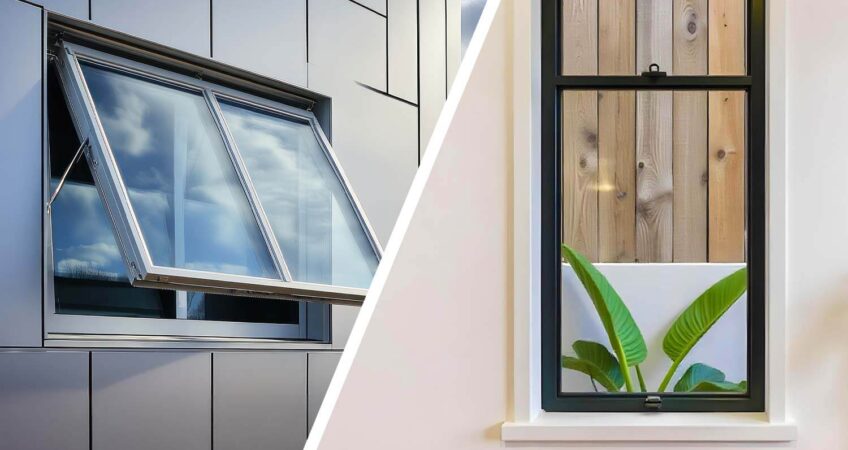
Awning windows are hinged at the top and crank open outward from the bottom, giving you ventilation even during rain. Picture windows are fixed panes of glass that do not open, giving you maximum natural light and an unobstructed view. The best choice depends on where you need the window, whether ventilation or light is your top priority, and how you want the window to perform in Oregon’s wet climate. Many homeowners in the Newberg and Portland area use both styles together, pairing a large picture window for the view with a smaller awning window above or below it for airflow. This guide covers the pros and cons of each style, when to use one over the other, and how to combine them for the best results.
What Are the Disadvantages of Awning Windows?
The disadvantages of awning windows are limited opening size, exterior clearance requirements, higher cost than hung windows, crank mechanism wear over time, and difficulty cleaning the outside of the glass from inside the home.
Awning windows open outward at an angle, usually to about 45 degrees. That means you need clear space on the exterior of the wall for the sash to swing out. If the window faces a walkway, patio, or porch, the open sash can block foot traffic or bump into furniture. For homes in Newberg and surrounding areas where covered porches are common, this is worth considering during the planning stage.
The crank mechanism is another factor. Awning windows use a hand-operated crank or a push-out mechanism to open. According to window industry data, crank hardware is subject to wear and tear over time, especially on windows that are opened and closed daily. Replacing a worn crank is a minor repair, but it is an ongoing maintenance consideration that fixed windows and sliding windows do not have.
Cleaning is also harder with awning windows, especially on upper floors. The outside of the glass cannot easily be reached from inside the home because the window opens outward. Homeowners with second-story awning windows in the Portland metro area typically need a ladder or a professional window cleaner to reach the exterior glass.
Are Picture Windows in Style?
Yes, picture windows are in style and have been growing in popularity in both modern and traditional home designs. Their clean, uncluttered look pairs well with contemporary architecture, and their ability to frame a view makes them a centerpiece in living rooms, dining areas, and great rooms. According to design industry trends, large glass panels and minimal frame profiles are among the most requested features in new and remodeled homes.
Picture windows work especially well with open floor plans because they share natural light and views across a larger area of the home. According to Today’s Homeowner, building codes require a minimum of one square foot of natural light for every 10 square feet of floor space. A single large picture window can meet or exceed that requirement for an entire room, making the space feel bigger, brighter, and more connected to the outdoors.
For homeowners in the Willamette Valley, where views of the Cascades, Coast Range, or simply a backyard garden are common, picture windows are one of the best ways to bring the outdoors in without sacrificing energy efficiency. Homes that maximize natural light tend to feel more open and welcoming, which is a big plus for both daily living and resale value.
When to Use Awning Windows?
Use awning windows when you need ventilation in a space where other window styles are impractical, when you want fresh air without letting rain in, or when the window opening is wider than it is tall. Awning windows are the best choice for bathrooms, kitchens, basements, and any room where the window sits higher on the wall or above a counter, appliance, or piece of furniture.
In Oregon’s climate, awning windows have a clear advantage over other operable window styles. Because the sash opens outward from the bottom while staying hinged at the top, the glass acts like a small roof over the opening. That means you can leave an awning window open during light rain without water getting inside. For homeowners in Newberg, Portland, and the rest of the Willamette Valley, where rain falls regularly from October through May, this feature is a major practical benefit.
Awning windows are also a smart choice for pairing with other window styles. A common combination is a large picture window in the center with one or two awning windows installed above or below it. This gives you the wide, unobstructed view of the picture window plus the airflow of the awning window, all in one opening. Homeowners planning a window replacement project often find that this combination is the best of both worlds.
What Are the Disadvantages of Awnings?
The disadvantages of window awnings (exterior shading devices mounted above windows) are different from the disadvantages of awning windows (a window style that opens outward). This question is about exterior awning shades. The main disadvantages of exterior window awnings are maintenance, limited durability, restricted views, and potential wind damage.
Fabric awnings need regular cleaning and can fade, tear, or develop mold in wet climates like Oregon’s. Metal awnings are more durable but can rust over time if they are not properly maintained. Both types can block natural light when you do not want them to, and they may obstruct the view from inside the home.
Many homeowners in the Portland area have moved away from exterior awnings in favor of windows with built-in energy efficient features like low-E coatings and argon gas fills. According to the U.S. Department of Energy, low-E coatings can reduce energy loss through glass by 30 to 50 percent, which provides year-round solar heat management without the maintenance or aesthetic trade-offs of a physical awning. Modern energy efficient windows handle solar heat gain through the glass technology itself, not through an external shade.
Are Window Awnings Outdated?
Yes, window awnings are considered outdated by most modern home design standards. While they served a useful purpose before low-E glass and advanced glazing technology existed, today’s energy efficient windows can manage solar heat gain and glare without the need for exterior shading. The shift away from awnings is part of a larger trend toward cleaner exterior lines and less exterior maintenance.
That said, some historic homes and mid-century modern homes in the Portland metro use awnings as a design element that fits their architectural style. In those cases, fabric or aluminum awnings can add character and curb appeal. But for the majority of new construction and remodeling projects, the window itself is expected to handle energy management on its own.
Are Awning Windows Harder To Break Into?
Yes, awning windows are harder to break into than many other operable window styles. Awning windows open outward from the bottom at a limited angle, which makes it very difficult for someone on the outside to reach through the opening or push the sash back in. When installed higher on a wall, as they often are in bathrooms and basements, awning windows are even harder to access from the outside.
Modern awning windows also feature multi-point locking systems that engage on both sides of the sash when the window is closed. According to security industry data, homes with multi-point locking systems on windows and doors are significantly harder for intruders to force open compared to homes with single-latch locks. For homeowners in Newberg and across the Portland metro who want fresh air without compromising safety, awning windows offer a good balance of ventilation and security.
Picture windows, by contrast, cannot be opened at all, which makes them inherently secure against forced entry through the opening. The glass itself can still be broken, but there is no latch, hinge, or track to manipulate. Homeowners focused on improving home security through their window choices should consider both styles as strong options for different reasons.
What Are the Pros and Cons of Awning Windows?
The pros of awning windows are ventilation during rain, good energy efficiency when closed, strong security, easy operation with a crank handle, and flexible placement options including high on walls and above countertops. The cons of awning windows are limited opening size, exterior clearance required, crank wear over time, difficulty cleaning the outside glass from inside, and higher cost compared to single-hung or double-hung windows.
Awning windows have lower air leakage ratings than sliding and hung windows because their compression seal creates a tighter fit when closed. According to the NFRC, casement and awning windows typically achieve air leakage ratings between 0.1 and 0.2, compared to 0.2 to 0.3 for sliding and hung styles. A lower air leakage number means less drafty air getting into your home, which translates directly to lower heating costs during Oregon’s long, cool winters.
The biggest practical advantage for Oregon homeowners is the ability to ventilate during rain. From October through May, Portland receives the bulk of its 43 inches of annual rainfall. With a hung or sliding window, opening the sash during rain means water coming in. With an awning window, the open sash acts as a shield that keeps most rain out while still allowing fresh air to flow through.
What Are the Pros and Cons of Picture Windows?
The pros of picture windows are maximum natural light, unobstructed views, the best energy efficiency of any window style, no moving parts to maintain, and the lowest air leakage rating possible. The cons of picture windows are zero ventilation, no emergency egress, and the inability to clean the outside glass from inside.
Picture windows are the most energy efficient window style available because they have no operable sash, no tracks, no hinges, and no seals that can fail. The glass is permanently sealed into the frame, which means the air leakage rate is as close to zero as any window can get. According to the Green Building Alliance, picture windows tend to have the lowest air leakage because the glass is sealed directly into the frame with no moving parts.
For rooms in your home where you want light and a view but do not need to open the window, picture windows deliver the best performance per dollar. A large picture window in a living room facing a garden, mountain view, or wooded lot is one of the most impactful upgrades you can make to a home. Research published in the Journal of Affective Disorders found that increased exposure to natural daylight is linked to a decrease in the risk of developing depression and improvements in mood and sleep quality.
Homeowners in Beaverton, Tigard, and across the Portland metro area who are considering a window upgrade should think about where replacement windows can bring in more light without adding energy costs. Picture windows are the clearest path to that goal.
| Feature | Awning Windows | Picture Windows |
|---|---|---|
| Ventilation | Yes, even during light rain | None (fixed glass) |
| Natural Light | Good (single sash, no dividers) | Best (largest unobstructed glass area) |
| Energy Efficiency | Very good (compression seal, low air leakage) | Best (no moving parts, sealed glass unit) |
| Typical Air Leakage Rating | 0.1 to 0.2 | Near zero |
| Security | Strong (multi-point locks, limited opening) | Strongest (no opening to access) |
| Maintenance | Moderate (crank and hinge upkeep) | Very low (no moving parts) |
| Best Rooms | Bathrooms, kitchens, basements, above counters | Living rooms, great rooms, stairways, hallways |
| Emergency Egress | No (too small for most codes) | No (does not open) |
| Rain Protection While Open | Yes (sash acts as a shield) | Not applicable |
Sources: National Fenestration Rating Council (air leakage data), Green Building Alliance (fixed window efficiency), U.S. Department of Energy (energy performance ratings).
Can You Combine Awning Windows and Picture Windows Together?
Yes, you can combine awning windows and picture windows together, and this is one of the most popular window configurations in modern home design. The most common approach is to install a large picture window as the main visual element and add one or two smaller awning windows directly above or below it. This gives you the wide, unobstructed view and maximum light of the picture window along with the airflow of the awning window.
This combination works especially well in living rooms, family rooms, and master bedrooms where you want a strong connection to the outdoors. The picture window handles the view and the light. The awning window handles the ventilation. Together, they cover every need without compromising on either performance or appearance.
Homeowners in the Portland area who are planning a full window replacement or a new construction project should discuss this combination with their window installer. The framing, sizing, and alignment of the two window types need to be precise for the finished result to look clean and perform well.
Why Do Awning Windows Work So Well in Oregon’s Climate?
Awning windows work so well in Oregon’s climate because they allow ventilation even when it is raining. Portland receives an average of 43 inches of rain per year, according to the National Weather Service, with most of that falling between October and May. During those months, homeowners who want fresh air face a constant trade-off with most window styles: open the window and let rain in, or keep it closed and deal with stale air.
Awning windows eliminate that trade-off. The sash swings outward from the bottom while the top stays anchored to the frame, creating a sloped barrier that deflects rain away from the opening. Light rain rolls off the glass and drips away from the house instead of into it. This makes awning windows the single best operable window choice for Oregon’s wet climate.
According to the U.S. Department of Energy, heat gain and heat loss through windows are responsible for 25 to 30 percent of residential heating and cooling energy use. In Oregon’s climate zone 4C, where heating dominates energy costs for most of the year, choosing windows with the lowest possible air leakage is essential. Awning windows deliver on that front as well, with compression seals that create a tighter fit than sliding or hung windows. Homeowners who want to see how specific window ratings affect performance in the Willamette Valley can explore the details of window energy ratings and what the numbers mean for Oregon homes.
How Long Should You Open Windows for Each Day?
You should open windows for at least 5 to 15 minutes per day to refresh indoor air quality, according to guidelines from the Environmental Protection Agency and indoor air quality researchers. In well-sealed modern homes, indoor air can become two to five times more polluted than outdoor air, according to the EPA. Brief periods of ventilation help flush out volatile organic compounds, excess moisture, cooking odors, and stale air.
For Oregon homeowners, the challenge is ventilating during the rainy season without letting water damage the interior. Awning windows solve this problem better than any other style because they can stay open during light rain. In bathrooms and kitchens, where humidity builds up from showers and cooking, opening an awning window for even 10 minutes can make a noticeable difference in air freshness and moisture levels.
During the dry months of June through September, any operable window style works well for ventilation. But from October through May, awning windows give homeowners in Newberg, Sherwood, and across the Portland metro the flexibility to ventilate without watching the weather forecast.
At What Humidity Should You Not Open Your Windows?
You should not open your windows when outdoor humidity is above 60 percent and the indoor humidity is already at a comfortable level (between 30 and 50 percent), according to the American Society of Heating, Refrigerating and Air-Conditioning Engineers (ASHRAE). Opening windows when outdoor humidity is high will bring that moisture inside, which can promote mold growth, condensation on surfaces, and a muggy, uncomfortable feeling in the home.
In Oregon, outdoor humidity often runs high during the rainy season. Portland’s average relative humidity hovers between 70 and 85 percent from November through March. During those months, short bursts of ventilation (5 to 10 minutes) are more effective than leaving windows open for extended periods. Awning windows are ideal for this because they can be opened just slightly to allow a controlled amount of airflow without exposing the interior to a full blast of humid outdoor air.
Homeowners who notice frequent condensation on their windows during winter may be dealing with a combination of high indoor humidity and poor window insulation. Upgrading to modern double-pane or triple-pane windows with low-E coatings can reduce condensation significantly. Oregon homeowners who want to match the right window to the local climate should start with a Zone 4C window selection checklist built specifically for the Portland area.
Why Don’t We Use Awnings Anymore?
Most homes do not use exterior awnings anymore because modern windows have built-in features that do the same job. Low-E glass coatings, argon gas fills, and advanced glazing packages now manage solar heat gain and UV protection without requiring a physical shade mounted on the outside of the house. According to the U.S. Department of Energy, low-E coatings alone can reduce energy loss through glass by 30 to 50 percent.
Exterior awnings add maintenance, cost, and visual bulk to the home. Fabric awnings need regular cleaning and replacement, especially in Oregon’s wet climate where mold and mildew can build up quickly. Metal awnings can rust and dent. For most homeowners in the Portland metro, the cleaner look and lower maintenance of modern energy efficient windows makes exterior awnings unnecessary.
Window awnings (the style of operable window) are a completely different story. Awning-style windows remain one of the best choices for ventilation in wet climates and continue to be popular in both new construction and remodeling projects across the Pacific Northwest.
Which Is More Energy Efficient, Awning or Picture Windows?
Picture windows are more energy efficient than awning windows because they have no operable sash, no hinges, no crank, and no seals that can wear out over time. The glass in a picture window is permanently sealed into the frame, which means the air leakage rate is as close to zero as a window can achieve. Awning windows are very energy efficient when closed, thanks to their compression seal design, but they still have moving parts that introduce some potential for air leakage over the life of the window.
According to the NFRC, air leakage ratings for awning and casement windows typically range from 0.1 to 0.2, which is excellent. But picture windows have effectively no air leakage because there is no opening for air to pass through. For rooms where you do not need to open the window, a picture window gives you the highest possible energy performance.
That said, the energy efficiency difference between a quality awning window and a picture window is small in practice. Both styles are far more efficient than older single-hung or double-hung windows with air leakage ratings of 0.3 or higher. The bigger energy win comes from choosing the right glass package, including low-E coatings, argon gas fill, and the appropriate U-factor for Oregon’s climate zone. Homeowners comparing options can learn how specific ratings affect real-world performance by exploring replacement windows in Newberg and the surrounding area.
What Are the Best Rooms for Awning Windows?
The best rooms for awning windows are bathrooms, kitchens, basements, laundry rooms, and any space where ventilation is needed but a full-size operable window is impractical. Awning windows also work well above kitchen sinks, over countertops, in stairwells, and paired with larger picture windows in living areas.
Bathrooms are the top pick. Humidity from showers and baths needs to escape, and awning windows installed high on the wall provide ventilation while maintaining privacy. According to the EPA, indoor air can be two to five times more polluted than outdoor air, and bathrooms without adequate ventilation are especially prone to mold and mildew. An awning window gives you a natural ventilation option that works even when it is raining outside.
Kitchens are another strong fit. An awning window above the sink or stove allows steam, cooking odors, and excess heat to vent outside without interfering with the countertop or backsplash. The crank handle is easy to operate with one hand, which is convenient when your other hand is busy cooking.
What Are the Best Rooms for Picture Windows?
The best rooms for picture windows are living rooms, great rooms, dining rooms, master bedrooms, home offices, and any space where you want maximum natural light and an unobstructed view. Picture windows also work well in hallways, stairways, and rooms that face a scenic view or landscaped yard.
According to research published by UCLA Health, increased exposure to natural light is associated with improved mood, better sleep, and reduced risk of depression. A large picture window that floods a living room or home office with daylight is not just an aesthetic upgrade. It is a functional improvement that can measurably affect how you feel every day. The Ergonomics International Journal found that access to natural light reduced eyestrain by 51 percent, headaches by 63 percent, and drowsiness by 56 percent in workplace settings.
For homeowners in the Willamette Valley who enjoy views of the surrounding mountains, farmland, or trees, a picture window turns that scenery into a permanent feature of the room. Because the glass has no grilles, muntins, or moving parts, the view is completely clear from edge to edge. Homeowners working on a remodel or upgrade in Beaverton, Tigard, or Portland often choose picture windows for the main living area and pair them with replacement windows in other styles for bedrooms and bathrooms.
Are People Getting Rid of Plantation Shutters?
Yes, many homeowners are moving away from plantation shutters in favor of clean, unobstructed window designs that maximize natural light. The trend in both new construction and remodeling is toward larger glass areas, simpler window treatments, and letting the window itself be the design feature rather than covering it up. Picture windows, in particular, look best with minimal or no window coverings.
Plantation shutters can block a significant amount of natural light, even when the louvers are open. For homeowners who have invested in a large picture window or a picture-and-awning combination, covering that glass with shutters defeats the purpose. Roller shades, sheer curtains, or no treatment at all are more popular choices for homes that prioritize light and views.
In the Portland metro area, where overcast skies are common for much of the year, every bit of natural light matters. Homeowners who are upgrading their windows as part of a broader improvement project should think about window treatments at the same time. The goal is to let as much light in as possible while still managing glare and privacy where needed.
How Do You Choose the Right Window Style for Each Room?
You choose the right window style for each room by matching the window’s strengths to the room’s needs. Start with three questions: Does this room need ventilation? Does this room need maximum light? Does this room need privacy?
If the room needs ventilation and privacy (like a bathroom), an awning window installed high on the wall is the best choice. If the room needs maximum light and a view (like a living room or great room), a picture window is the right call. If the room needs both light and airflow (like a kitchen or family room), a combination of picture and awning windows gives you everything in one opening.
For bedrooms, building codes in most jurisdictions require at least one egress window that is large enough for emergency escape. Neither awning windows nor standard picture windows typically meet egress requirements. Bedrooms usually need a casement, single-hung, or double-hung window that opens wide enough to meet the minimum egress dimensions. Homeowners planning a full home window replacement should work with an experienced installer who knows the common mistakes to avoid and can recommend the right style for every room.
What Window Brands Offer Both Awning and Picture Windows?
Most major window manufacturers offer both awning and picture window styles. In the Pacific Northwest, two of the most trusted brands are Milgard and Marvin. Both brands manufacture awning windows, picture windows, and combination units in a range of frame materials including vinyl, fiberglass, and wood.
Milgard is headquartered in Tacoma, Washington, and manufactures windows specifically designed for the Pacific Northwest climate. Their product line includes awning windows with multi-point locking and picture windows in custom sizes. Homeowners in Newberg and Portland who are interested in Milgard windows can see the full line in a local showroom.
Marvin windows are manufactured in Minnesota and offer premium fiberglass and wood options with industry-leading energy ratings. Marvin’s Ultrex fiberglass frame is known for its durability and low thermal conductivity, which makes it an excellent choice for Oregon’s wet, cool climate.
Frequently Asked Questions
Do Awning Windows Leak in Heavy Rain?
No, awning windows do not typically leak in heavy rain when they are closed properly. When open during light to moderate rain, the outward-swinging sash deflects water away from the opening. In very heavy rain with strong wind, it is best to close any operable window to prevent water intrusion. Modern awning windows with quality weatherstripping and multi-point locks create a tight seal that prevents leaks when closed. Homeowners in Portland and Newberg, where heavy winter rainstorms are common, should always close awning windows during severe weather.
Can a Picture Window Be Used as an Emergency Exit?
No, a picture window cannot be used as an emergency exit because it does not open. Building codes in Oregon and most other states require at least one egress window in every bedroom that meets minimum size requirements for emergency escape. Picture windows do not meet this requirement. If you are replacing windows in a bedroom, at least one window in the room must be an operable style (casement, single-hung, or double-hung) that meets egress dimensions.
How Do You Clean the Outside of an Awning Window?
You clean the outside of an awning window by opening the sash fully and reaching through from inside, if the window is on the ground floor and accessible. For upper-floor awning windows, you typically need a ladder or an extendable window-cleaning tool to reach the exterior glass. Some awning window models have a feature that allows the sash to open wider than the standard 45 degrees for easier cleaning access. Homeowners in the Portland area should ask about cleaning access when choosing awning windows for second-story rooms.
Are Awning Windows More Expensive Than Picture Windows?
Awning windows are generally similar in price to picture windows of the same size, but the total installed cost may be slightly higher because awning windows require crank hardware, hinges, and a more complex frame. Picture windows have no moving parts, which simplifies manufacturing and installation. The price difference is usually small and depends on the brand, frame material, and glass package selected. Both styles are mid-range in cost compared to other window types.
Which Window Style Is Best for a Bathroom in Oregon?
An awning window is the best window style for a bathroom in Oregon. It provides ventilation to control humidity and prevent mold, it can be opened during rain without letting water in, and it can be installed high on the wall for privacy. According to the EPA, bathrooms without adequate ventilation are especially prone to mold and mildew. An awning window gives Oregon homeowners in the Newberg and Portland area a natural, energy-efficient way to manage bathroom moisture year-round.
Can You Put an Awning Window Under a Picture Window?
Yes, you can put an awning window under a picture window, and this is one of the most popular window combinations available. The picture window sits on top and provides light and views. The awning window sits below and provides ventilation. This arrangement keeps the main view unobstructed while adding airflow to the room. Many homeowners across the Willamette Valley use this combination in living rooms, family rooms, and master bedrooms.
Do Picture Windows Add Value to a Home?
Yes, picture windows add value to a home by increasing natural light, improving energy efficiency, and enhancing curb appeal. According to the National Association of Realtors, homes with ample natural light and updated windows are more attractive to buyers and tend to sell faster. A large picture window that frames a view or floods a room with light is one of the most visually impactful upgrades a homeowner can make. Buyers in the Portland metro area consistently rank natural light and views among their top priorities when evaluating homes.
Final Thoughts
Awning windows and picture windows each do something the other cannot. Awning windows give you airflow in rain, privacy placement, and strong security in a compact package. Picture windows give you maximum light, unbeatable energy efficiency, and the cleanest possible view. For most homes in Oregon, the answer is not one or the other. It is both, used in the right combination for the right rooms.
Matching the right window style to each room’s needs is one of the smartest decisions you can make during a window replacement project. Getting it wrong means living with compromises for the next 20 to 30 years. Getting it right means better comfort, lower energy bills, and a home that looks and feels exactly the way you want it to. EnergyGuard Windows & Doors has been helping homeowners across Newberg, Portland, and the entire Willamette Valley choose and install the right replacement windows for over 40 years. Call (503) 554-5500 today to schedule a free in-home design consultation and see exactly which combination of window styles will work best in your home.